 James@cdham.org
 270-831-5318
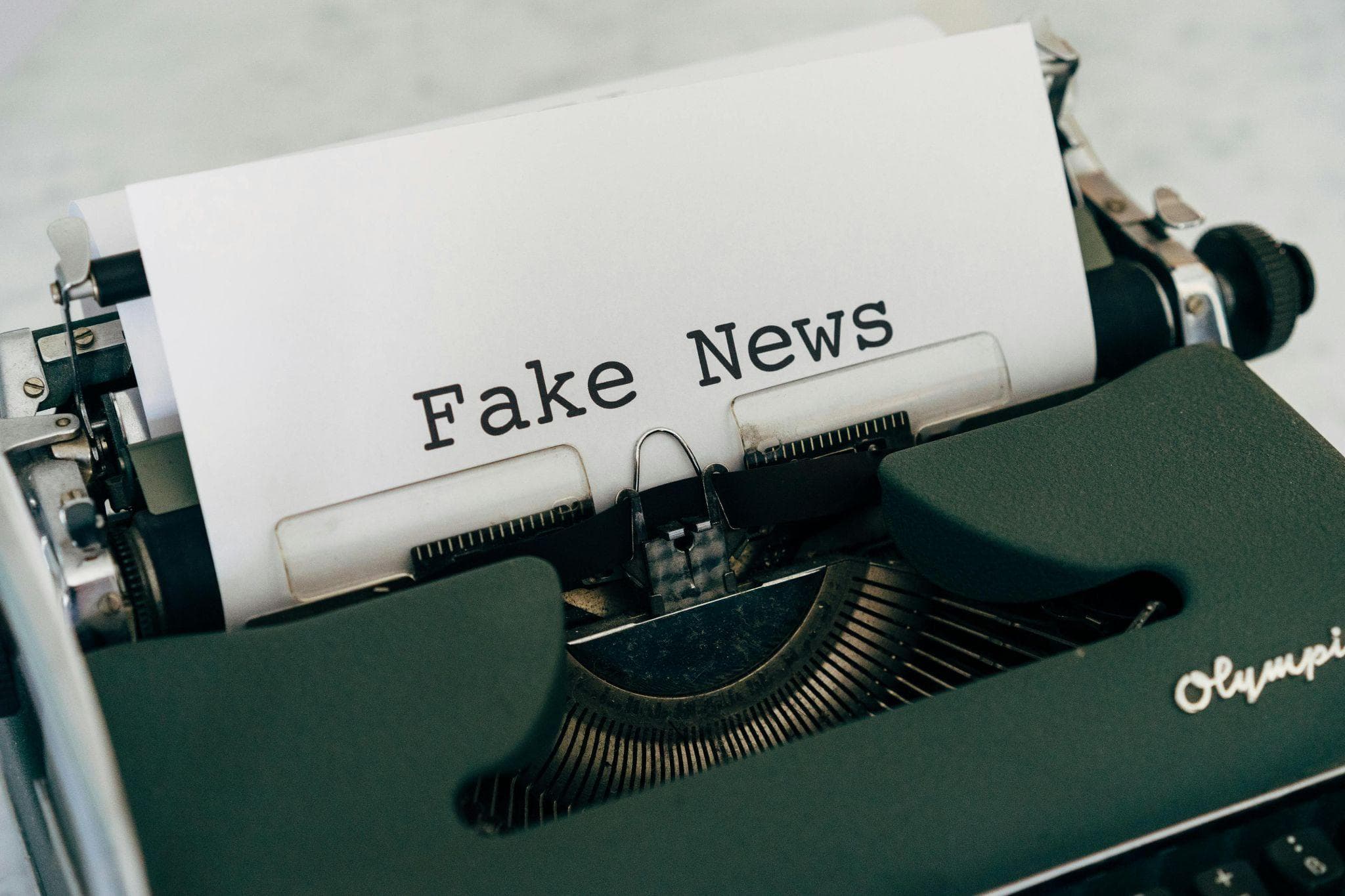
Imagine a high-stakes, chaotic casino. The tables are always hot, the dealers are anonymous, and there are no rules to speak of. The house, in this case, isn’t trying to win your money; it’s trying to capture your attention and exploit your fear. This is the perfect analogy for the digital environment during a disaster, a place where fake news spreads with the speed and unpredictability of a wildfire. The allure of this casino is powerful; it offers a high-voltage emotional payoff without any real effort. People are drawn in by the promise of an easy “win”—a sensational headline, a shocking rumor—that provides a rush of certainty in a moment of great confusion. In this unregulated space, every player is a dealer, and every share of a falsehood is a roll of the dice with real-world consequences. This is a world where misinformation and disinformation thrive, often luring people in with the deceptive ease and instant gratification promised by things like no deposit bonus sites, where the rewards seem to come without any cost at all. In a disaster, fake news is not just an inconvenience; it is a direct and dangerous threat to public safety, and it’s time we understood this threat for what it is. The stakes are our collective health, safety, and a shared understanding of reality, and the game is being played on a floor where the rules are entirely optional.
The digital casino operates on a simple, yet terrifying, principle: chaos is profitable. The “unseen croupiers,” in the form of bots and foreign actors, flood the system with false narratives, knowing that even the most preposterous claims will find an audience desperate for a simple explanation. Disasters, whether they are natural calamities like hurricanes and earthquakes, or public health emergencies like a pandemic, are the perfect breeding ground for this type of digital gambling. When information is scarce and fear is abundant, the human mind searches for a narrative to cling to, no matter how unbelievable. These narratives, often simple and emotionally charged, provide a false sense of control in a situation where the truth is complex and overwhelming. This article will argue that this is a global crisis, one that requires a complete overhaul of our approach to public communication. It is a fundamental challenge to the very idea of a shared reality, and it demands strategies that go far beyond simple fact-checking. We need to understand the game, the players, and the psychology that makes us all vulnerable to the house.
The Psychology of Disinformation in Crisis
To understand how to combat disinformation, we first have to understand why it spreads so easily. During a disaster—whether it’s a pandemic, a natural catastrophe, or a civil emergency—a collective sense of fear, uncertainty, and anxiety takes over. In a state of high emotional arousal, our brains are hardwired to seek out information, any information, to make sense of what’s happening. This creates a cognitive vacuum that misinformation rushes to fill. We want answers, and we want them now. When credible, official sources are slow to provide them, we turn to the most accessible, and often the most emotionally charged, sources available on social media. This is where our cognitive biases come into play. We are inherently prone to confirmation bias, the tendency to accept information that confirms our pre-existing beliefs while ignoring information that contradicts them. If we already harbor a distrust of authority, we are more likely to believe a conspiracy theory, no matter how outlandish. This is often compounded by a phenomenon known as group polarization, where individuals within a group adopt more extreme positions after discussing an issue. This creates a powerful echo chamber effect, where a dangerous idea becomes normalized and then amplified.
Furthermore, we are vulnerable to the availability heuristic, a mental shortcut that leads us to favor information that is easily recalled or comes to mind first. In the digital age, the most available data is often the most sensational, not the most accurate. Another powerful psychological lever is the mere-exposure effect, where we are more likely to believe something is true simply because we’ve been exposed to it many times. Repetition creates a sense of familiarity, and familiarity, in our brains, can be easily mistaken for truth. A simple lie travels at the speed of light, while a detailed, fact-checked debunking takes time and effort to produce and disseminate. It’s an unfair fight, and the truth is often the first casualty. So, what is it that we’re really fighting? We are not just fighting lies; we are fighting the very psychological vulnerabilities that make us human. We are fighting a deep-seated desire for certainty, a need for belonging, and a cognitive system that is often more concerned with speed than with accuracy. The disinformation casino preys on these traits, turning our mental shortcuts against us.
The “House Rules”: Algorithms and the Amplification of Lies
If a disaster is the catalyst for disinformation, then social media platforms are the “casino floor” where the game is played. The house rules, in this case, are the algorithms that govern what we see. These algorithms aren’t designed to prioritize accuracy or truth; they’re designed to maximize user engagement and, by extension, ad revenue. They learn what triggers a user’s emotional response—outrage, fear, validation—and then serve up more of that duplicate content. This creates a powerful, self-reinforcing feedback loop. A sensational but false headline about a disaster gets more clicks and shares than a dry, factual report, so the algorithm promotes it. This inherent bias of the algorithm inadvertently becomes a powerful tool for amplifying false narratives. A dangerous lie can go viral in a matter of minutes, reaching millions of people before public health officials even have a chance to formulate a response. The platforms themselves are akin to a casino, profiting from the chaos and indifferent to the harm caused by the high-stakes games played on their floor. The very architecture of modern communication platforms favors sensationalism over accuracy, creating a perfect environment for disinformation to thrive. They’re built for virality, and virality has no moral compass. Their business model is built on keeping us glued to our screens, and if a lie does that better than the truth, then the lie wins. This is the fundamental conflict that public safety authorities face today.
The algorithms also enable a more sinister form of disinformation: micro-targeting. Bad actors can craft specific lies and deliver them directly to vulnerable, pre-selected communities. For example, a lie about a public water supply can be sent to a particular neighborhood, or a false medical claim can be targeted at a specific support group. This makes it incredibly difficult for authorities to track and debunk. The lack of accountability on these platforms and the lightning-fast speed at which a lie can be amplified create a perfect environment for disinformation to thrive. We are not just at the mercy of the algorithm’s flaws; we are at the mercy of those who understand how to manipulate them for their own gain. The platforms’ business models are a direct contradiction to the public good, and it’s a conflict that is tearing at the fabric of our society. The digital casino is not a neutral space; it is a designed environment, and its design has consequences.
The High Stakes: Real-World Harm Caused by Fake News
The harm caused by disinformation is not confined to the digital world; its consequences spill over into real life with devastating effects. During a public health crisis, medical misinformation can be a matter of life and death. False rumors about miracle cures or dangerous preventative measures can lead people to ignore the advice of health professionals, resulting in preventable illness and death. We’ve seen countless examples of how online rumors can lead to people ingesting dangerous substances or engaging in risky behaviors, all based on a lie they saw on social media. Beyond individual harm, fake news can lead to broader social chaos. During a natural disaster, false rumors about a lack of resources or the location of emergency shelters can incite panic-buying, civil unrest, and even dangerous stampedes. Disinformation campaigns can also deliberately undermine public trust in authorities at a time when it is most needed, making it more difficult for officials to organize a coherent and effective response. The erosion of trust is a particularly insidious form of harm, as it makes an entire population more vulnerable to future crises. When people no longer believe in credible sources, they are left adrift in a sea of conflicting and often dangerous information. The very fabric of community can be torn apart by the poison of mistrust, leaving people isolated and unprotected when they need each other most. The stakes are a community’s sense of shared reality and its ability to respond to a threat with one mind.
The damage doesn’t stop there. Disinformation can also inflict deep psychological trauma. Living in a world of constant falsehoods can lead to anxiety, paranoia, and a profound sense of disorientation. How can you plan for a future when you don’t even know what to believe? This is the insidious, slow-burning harm of fake news. It doesn’t just mislead; it disorients. It doesn’t just misinform; it destabilizes. We are witnessing communities fragment and social cohesion erode as people struggle to agree on fundamental facts. The chaos sown by a handful of lies can have cascading, unpredictable effects that ripple through a society for years. The damage isn’t just about a failed evacuation plan; it’s about a failed society, a collective inability to cooperate on a shared threat. The casino of fake news is a hazardous game indeed, and the losses are not just financial.

Case Studies in Crisis Misinformation
To truly understand the danger of disinformation, we must look at concrete, real-world examples. The history of modern communication is filled with unfortunate case studies where misinformation took a devastating toll. We can see the same patterns of behavior and the same harmful outcomes repeating themselves across different crises. The sheer volume and variety of these incidents is a sobering reminder that we are dealing with a systemic problem, not a series of isolated events. This part will contain the only list for the entire article, which will serve as a roadmap for the more detailed case studies to be presented in the final article. Each of these topics represents a dangerous manifestation of disinformation that authorities had to struggle against.
- Misinformation about a disease outbreak’s origins and cures
- False rumors about a natural disaster’s scale and response
- Disinformation campaigns targeting public health officials
- Hoaxes about government quarantine measures or food shortages
In a health crisis, for example, we’ve seen how false rumors about “alternative” cures have led people to avoid proven medical treatments. During natural disasters, we’ve seen how fake news about a looming tsunami or a blocked escape route has led to unnecessary panic and chaos. Each of these cases serves as a lesson in the fragility of public trust and the power of a well-timed, well-distributed lie. The devastating consequences are a direct result of the casino-like environment where people are incentivized to share, not verify. We need to learn from these mistakes and stop allowing the same patterns of harm to repeat with every new crisis. Let’s take the case of a fictional flood, for example. A false image of a dam bursting goes viral, causing people to panic and clog escape routes, leaving them vulnerable to the real danger. The source? A simple troll account that wanted to sow chaos. The outcome? Real-world chaos and endangerment.
This is the very essence of the problem. A simple lie, unhindered by regulation and fueled by fear, can cause mass public panic. Or, consider a health crisis. A conspiracy theory about a supposed “miracle cure” spreads across social media. People, desperate for a solution, begin to self-medicate with dangerous substances, leading to hospitalizations and worse.
Meanwhile, official warnings from health authorities are drowned out by the noise. The authorities’ message is too slow, too measured, and lacks the emotional punch of the misinformation. This isn’t just a communication breakdown; it’s a breakdown of social order itself, showing just how fragile our shared reality is. The only way to win in this rigged game is to stop playing it by the casino’s rules.
From Reactive to Proactive: Strategies for Authorities
So, how do we fight back? The answer is to move from a reactive to a proactive communication strategy. Simply debunking a lie after it has gone viral is like trying to put out a forest fire with a water pistol. It’s a losing battle. Instead, public officials and health authorities must work to build a resilient communication strategy that is prepared for a crisis before it even begins. This involves building public trust in a time of peace, so that when a crisis hits, people already know where to turn for accurate information. Authorities must establish clear and consistent communication channels, using a variety of platforms to reach the public with a single, unified message. They should leverage the same speed and accessibility of digital platforms, using short videos, infographics, and easily digestible content to get their message out.
Most importantly, they should use rapid-response fact-checking systems that can quickly identify and debunk false information before it has a chance to spread widely. This is a speed fight, and the truth must be given a fighting chance. It’s about having a plan in place, a fire department ready to go, instead of waiting for the fire to be out of control.
To be truly proactive, a government or public health body must invest in media literacy education for the public. This is a long-term strategy, a slow burn that teaches people how to think critically about the information they consume. It’s about teaching people to spot a lie before they share it, to question the source, and to recognize their own cognitive biases. It’s about empowering the public to become their own fact-checkers. Furthermore, authorities must build a multi-disciplinary team for crisis communication. This team should include not just communications professionals but also data scientists who can track disinformation in real-time, psychologists who understand the drivers of public fear, and community liaisons who can build bridges with local leaders and influencers. A proactive strategy is not just about what you say; it’s about how you listen and who you work with. It’s about turning the tables on the casino and creating a new set of rules for the public good.
Building a Firewall of Trust: Why There Are No Quick Fixes, Like No Deposit Bonus Sites
At the end of the day, no amount of technology or sophisticated communication strategy can be adequate if the public does not trust the source. The single most crucial element in combating disinformation is the establishment of trust. It’s the ultimate firewall, and it’s something that must be built brick by brick, long before a crisis hits. Public officials must be radically transparent, admitting what they don’t know and providing consistent, honest updates. They must be empathetic, acknowledging the public’s fears and anxieties rather than simply dismissing them. The human connection is the ultimate antidote to the impersonal and deceptive nature of fake news. Unlike a quick lie that offers a fleeting sense of certainty, building trust is a slow and deliberate process. There are no shortcuts and no magic bullets. The idea that you can solve this problem with a quick fix, something for nothing, is just as deceptive as the fake news itself. This is why the promise of something easy, like the offers from no-deposit bonus sites, is so misleading in a high-stakes environment where a freebie can cost lives. You can’t build a society on shortcuts.
Trust is built through small, repeated acts of integrity. It’s built when an official gives a straight answer, even when it’s not the answer the public wants to hear. It’s built when a health agency admits a mistake and corrects its course. This is the long-term investment that pays off when a crisis hits. The digital casino offers a quick thrill, but absolute security comes from a solid, trustworthy foundation.
Furthermore, a proactive strategy should include pre-bunking, where authorities anticipate common misinformation narratives and debunk them before they even go viral. This is a strategy that recognizes the predictive nature of disinformation and seeks to inoculate the public against it. It’s about turning the tables on the liars and getting ahead of the game. It’s a painstaking process, but it’s the only way to build a society that is resilient to lies.
Conclusion
The “unregulated casino of fake news” is a high-stakes game that we are all forced to play, and the odds are stacked against us. The human psychology of fear, the algorithmic bias of our communication platforms, and the very real harm caused by disinformation create a perfect storm of chaos and danger. But it is a battle that can be won. By moving from a reactive to a proactive strategy, by building a resilient communication framework, and by focusing on the ultimate firewall of trust, authorities can effectively protect the public. The future of public communication in a digital world is a challenge, but it’s one that we must face head-on. The fight against disinformation isn’t about controlling the narrative; it’s about protecting the truth. It’s about building a society that is immune to manipulation and resilient to chaos. It’s about ensuring that in a moment of crisis, we can rely on our shared reality and trust our leaders. The casino’s game is based on lies, but our survival depends on truth. In this fight, there is no such thing as a free lunch, no magic button, and no easy win like you might find on no-deposit bonus sites. The real prize is a safe and informed society, and that’s a jackpot worth working for.